

November 27, 2026
"Keeping Teams": Reflections through the lens of a CEO
This week we held our first team away day with a professional organization that specializes in team building. This trigged me to think of my own journey in building and keeping teams.
When I first became a CEO, I quickly realized that none of the skills or technical knowledge I had built over the years would save me in the role I had been appointed to. What truly mattered was managing people, a skill I did not have altogether!
Even more unexpectedly, I realized that the outcomes I needed did not depend on how well I harvested people’s skills, knowledge and set clear targets, but on how well I kept them happy, grounded, valued and appreciated. We spend around one third of our lives at work. That is most of our waking, productive time. I am deeply convinced that this time should be spent feeling purposeful, supported, productive, and able to make a real difference.
I had also been part of teams before becoming a CEO, unfortunately there has been times when I felt bullied, excluded, targeted and my self-confidence drained. I knew with absolute certainty that these were not feelings I ever wanted anyone to experience on my watch.
Many people speak about “toxic” or “poisonous” work cultures. I began to ask myself a different question: what kind of work culture do I personally want to wake up to every day? I dreamed I want to go to work feeling that I am among friends—people I care about, and people who care about me. I decided that this would be the culture of the organization I lead.
One of the earliest behaviors I observed was gossip. When people are upset, the pattern is familiar: someone dislikes something another person has done, assumes it was done with bad intent, and then shares that interpretation with others they trust. Those listeners offer empathy and understanding, which brings a sense of relief. But in the process, a negative view is passed on, and the real issue remains unresolved. I began challenging my team to behave differently: instead of assuming harm, what stops us from asking someone about their intention? What would happen if we increased direct communication and said, “When you did that, this is how it made me feel? What was your intension?” If you are upset or angry, take time to cool down—but then muster the courage to have the difficult conversation. Ask why. Seek understanding. Share impact. And try to find a way forward that works for both sides. If that cannot be achieved, then involve your line manager.
Together as a team we decided to make this approach part of our culture.
I am deeply influenced by the biblical principle of the Servant King. The concept that whoever wants to lead must be willing to lower themselves and serve. Together as a team we clarified our roles. It is my role to serve my staff team: to ensure they had the best support, tools, and environment to the very best of my abilities. In turn, it is their role to serve each other and the client we support to the very best of their abilities.
Kindness is a non-negotiable value and our biggest strength, never confused with a lack of firmness, accountability or quality. Rules and standards mattered. But how we treated one another mattered just as much. An acknowledgment that mistakes are a sign that someone is trying to do something. We fix mistakes together. Mistakes are goldmines for learning and growth. A mistake is only a mistake when you have not learned anything from it. We jointly agree that a person’s true signature is not the line they sign on paper, but their integrity and quality of their actions. Collectively, those actions form the signature of the organization.
We also embraced this truth; a team is only as strong as its weakest member. That means the “weakest” must be protected, supported, and strengthened, not sidelined or blamed. Another challenge I had to consciously address was human competitiveness. The adrenaline that comes from winning is one of the most powerful tools to move forward. The question was how to redirect that desire from individual wins to collective success and nourish and harness our fundamental urge to win. Here again, biblical imagery of “the body of Christ” challenged me. Each person has a unique role and ability, but the whole body is required to finish the race. Making each person not to compete or compare with the rest of the team but to acknowledge that each one’s unique skills and knowledge was needed to be one functioning body. This has by no means been easy. But gradually, as the team started to understand their value and appreciate the value of others, we began to function as one unit. The result, a team supporting one another, each leading confidently in areas of expertise, and following just as willingly when others were better placed to lead.
We acknowledge that Leadership and Followership carry equal power. There is no leader without someone willing to follow. Trust and respect, then, becomes central. No one follows someone they do not trust and respect. It then becomes apparent that, anyone who wants to lead must be prepared to earn trust and carry responsibility for those they lead.
We also learned the importance of acknowledging time as our most valuable resource. Hence as a team we work to clear timeframes which in turn maintains focus and keeps momentum. I am equally convinced that the quality of decisions depends heavily on the quality of information available in the moment those decisions are made. We made it a cultural priority to ensure good, timely, reliable information is always available for critical decisions. The results have been remarkable.
Today, I am genuinely proud of my team. The breakthroughs we have achieved recently are a testimony to the power of collective effort and shared purpose.
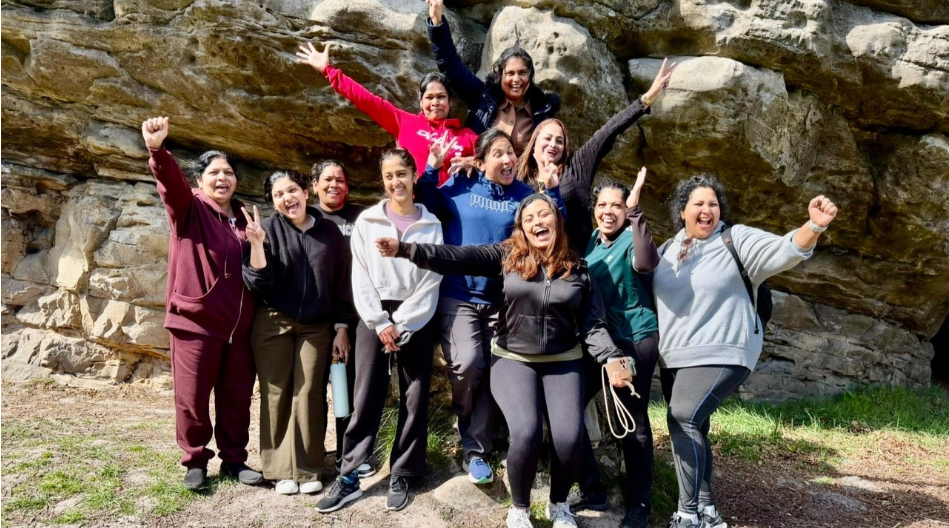
Team away day: The plan was to divide staff into two teams and declare a winner at the end of the day. I asked the organizer if we could instead mix teams for each activity as I instinctively felt afraid that my years of effort of building one team would fall apart in one day. He looked at me and to my great relief he understood immediately! The organizer adapted the program in response, setting harder tasks and focusing on how the group planned, communicated, and supported one another to succeed. What followed was powerful to witness.
We witnessed a team working together to win collectively, almost in competition with the organizer to beat the targets set by him, to succeed collectively, stronger members supporting those who needed help, and individuals often considered “weaker” stepping forward confidently in their areas of expertise. The respect on everyone’s faces was unmistakable.
But above all, they have reinforced one belief: when people feel valued, trusted, and united, extraordinary things become possible.
Written by Christina George Isaac
Chief Executive Officer, Just Homes Charity
More Updates


"Is not this the fast that I choose: to loose the bonds of injustice, to undo the thongs of the yoke, to let the oppressed go free, and to break every yoke? Is it not to share your bread with the hungry, and bring the homeless poor into your house; when you see the naked, to cover them, and not to hide yourself from your own kin?" Isaiah 58 6-7