

November 27, 2026
A Delicious piece of Cake! and can a 'Hot Meal' reduce the Benefit Bill?
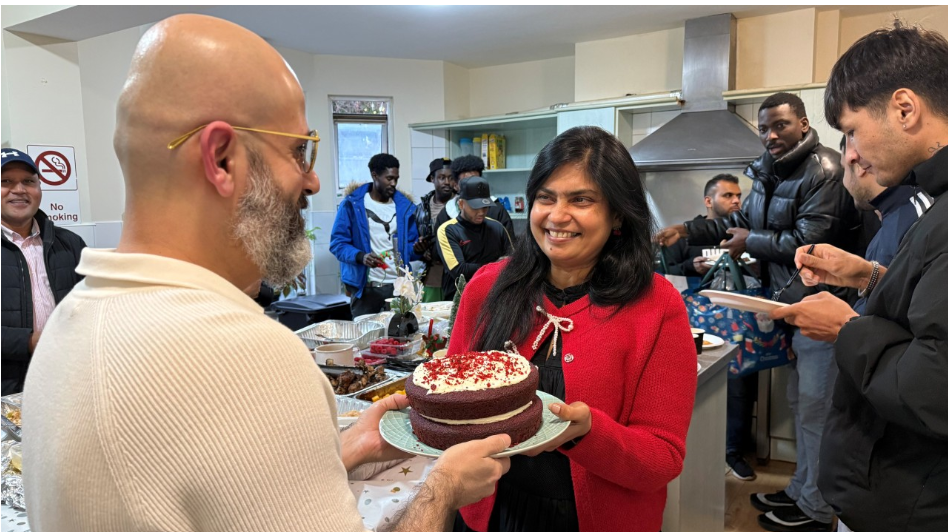
Today, we are celebrating Christmas at one of our men’s hostels. Our chef has prepared a truly scrumptious Christmas meal for our residents, and our staff have carefully put together festive hampers containing warm clothing, blankets, washing kits, and Christmas treats. The high light for me is the cake a resident has baked for the party.
Each hamper has been thoughtfully packed with items handpicked for each individual resident. A great deal of care, planning, and attention has gone into this work over the past couple of months, all leading up to today. The intention is simple but powerful: to ensure our residents feel a sense of belonging and have a “family” with whom to share Christmas.
Working with single homeless men with low support needs is probably one of the most unglamorous areas of the charity sector. There is no way to dress up single homelessness, particularly when it affects men. Even after 30 years of working in this field, the image that still instinctively comes to mind is of someone looking scruffy, huddled on a street corner with a begging bowl—perhaps now replaced by a contactless donation device.
But the reality is far more complex.
From my experience, homelessness rarely stems from choice. The causes are varied: a relationship or marriage breakdown (with men statistically more likely to end up homeless), an unexpected job loss, or a sudden financial shock. It is worth asking ourselves: how many wage slips are we each away from homelessness? How long would our savings sustain our current housing if we were unable to find work? During last month’s Homeless Street Count, I encountered two young men with postgraduate qualifications who had full legal rights to live and work in the country. Despite their education and active efforts to secure employment, they were sleeping in the doorway of the local library. Their situation is a stark reminder that neither advanced education nor determination alone guarantees protection from homelessness.
Low-support provision, like the service we offer, may be unglamorous, but it provides a critical safety net. We catch people early and support them back into employment and into the social structures of society—before homelessness becomes entrenched and compounded by alcohol or drug dependency. In my experience, substance use is often not the cause of homelessness, but a consequence of it. People begin drinking or using drugs to cope with depression, isolation, and despair, and before they realise it, dependency takes hold.
I would argue that unglamorous, low-support provision like ours plays a vital role in reducing the overall benefits bill. By intervening early and addressing homelessness before individuals become entrenched in addiction, we prevent the need for far more costly, high-support services later on. Once dependency on alcohol or drugs takes hold, not only do support costs in Benefits rise significantly, but an individual’s chances of returning to employment and re-entering the social ladder diminish sharply.
In our houses, we provide every resident with a free hot evening meal, alongside access to food throughout the day. Meals are cooked from scratch using fresh, nutritious ingredients, and wherever possible we shop locally to support local businesses.
After 30 years in the sector, I have observed that when someone is on a low income or experiencing depression, buying ingredients and cooking nutritious meals is often the last priority. Money disappears quickly on takeaway food. When hunger or cold sets in and funds run low, the temptation to spend what little remains on cigarettes, alcohol, or substances is strong. Consequently, personal hygiene standards drop instantly. If we are serious about helping someone rebuild their life, it is essential to keep them nourished, focused, and mentally able to engage in training, education, or job searching. This is why free hot nutritious meals are not an optional extra in our services—they are fundamental.
Some have fiercely criticised this approach, suggesting that it creates dependency. My response has always been that every resident contributes to the day-to-day running of the house, with responsibilities that include working alongside our chef to develop practical cooking skills and an understanding of kitchen hygiene and cleaning standards.
It’s those criticisms that has provoked me to write this article today.
The piece of cake I fondly enjoyed today—a delicious red velvet cake —was baked and served at the party by one of my residents. Nearly two years ago, when I took him off the streets, he was deeply depressed and on such heavy antidepressants that he was constantly drowsy. During his time with us, he has transformed. He is now on minimal medication, cheerful, engaged, and passionate about cooking and gardening. He works alongside the chef most days and, a few months ago, began baking cakes. The result rivals anything you would buy in a coffee shop.
He is currently undertaking a paralegal training course and is saving from his benefits towards a deposit for moving into private rented accommodation.
For me, this is the quiet magic of one well-cooked hot meal a day. It is not just food—it is dignity, stability, and the foundation upon which someone can rebuild their life. This also give the resident a realistic chance to save up for move on accommodation. And as far as finances of this country goes, a sure way to get some off benefits and back into the employment market!
Written by Christina George Isaac
Chief Executive Officer, Just Homes Charity
More Updates



A Bitterly Cold Day, an Empty Room, and a shocking realization of the Power of Dreams!


"Is not this the fast that I choose: to loose the bonds of injustice, to undo the thongs of the yoke, to let the oppressed go free, and to break every yoke? Is it not to share your bread with the hungry, and bring the homeless poor into your house; when you see the naked, to cover them, and not to hide yourself from your own kin?" Isaiah 58 6-7